Goalkeeper gloves adidas
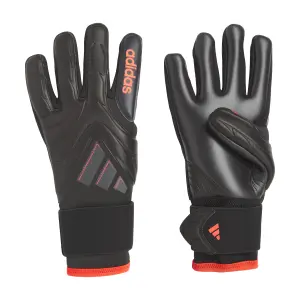


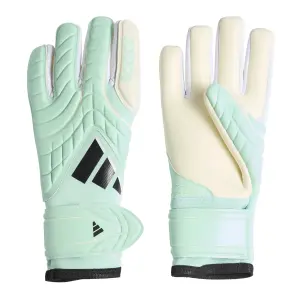
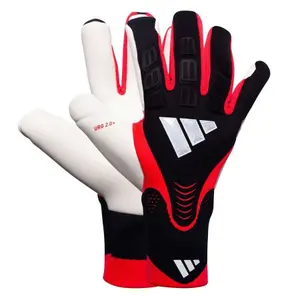

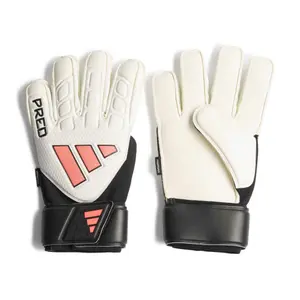
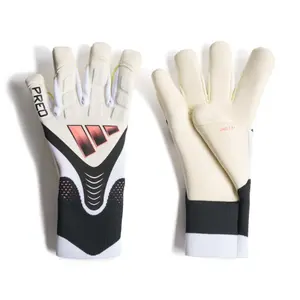

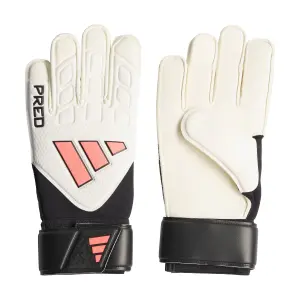
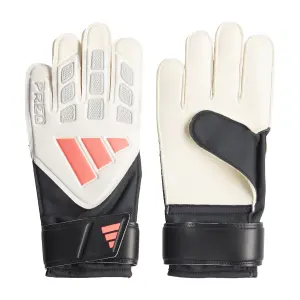
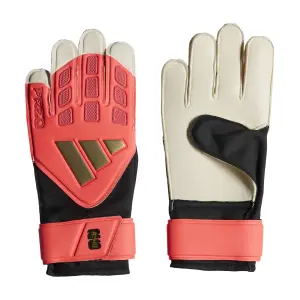
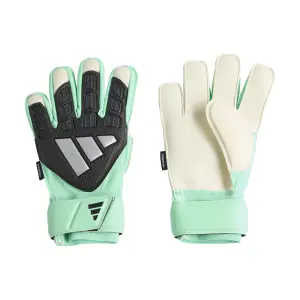


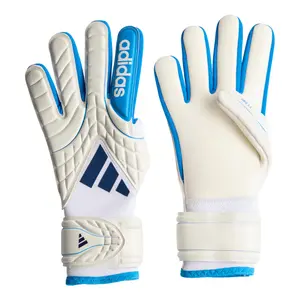

The goalkeeper gloves adidas gathered on this page cover competitive play as well as training sessions, from the beginner junior goalkeeper to the experienced one. You’ll find the lines of the brand with the three stripes, the goalkeeper gloves adidas in negative cut as well as the more wrapped models, available in both adult and child sizes.
To help you navigate, the text below the products details the ranges, cuts, sizes, and maintenance.
Why choose adidas goalkeeper gloves?
You choose adidas goalkeeper gloves when you're looking for a brand that offers the same position across different levels of play, from the first training session to the Sunday match. The brand designs its gloves by line, and each line comes in several finishes: a high-end model meant for matches, intermediate versions for playing and training without breaking the bank, and simpler training models designed to withstand repetitions on dry or synthetic pitches. Essentially, you're not just choosing a name of a range, but also the level of finish that corresponds to your actual use.
The second point of reference is the palm foam. Softer foam grips the ball better but wears out quickly, especially on abrasive surfaces; denser foam lasts longer and is better suited for repeated sessions. A goalkeeper who plays a match once a week and trains twice often benefits from having two distinct pairs rather than a single high-end pair that wears out in a few weeks.
Predator, Tiro, Copa: how adidas ranges are organised
adidas divides its goalkeeper gloves into a few families sharing the same names as its football boots. The Predator line is the most extensive and visible: it spans from training models to match models, and this is where the brand places its most refined finishes, including versions with spines in the fingers. The Tiro line is more focused on club play and training, featuring gloves that are easy to put on and maintain. The Copa line carries the more classic spirit of the brand, with a simple fit.
The ranges evolve from season to season, and a line name doesn't guarantee the same materials from year to year. A useful habit is to read the details of the model that interests you: the type of cut, the presence of spines, the wrist fastening system, and the specified foam tell you more about the glove's use than the name of the range.
What cut of adidas goalkeeper gloves to choose?
The cut determines how the glove fits your hand, and it's the criterion that most affects the feel of the ball. Four families of cuts exist in most brands, including adidas.
- The negative cut: the seams are on the inside of the glove, the fit is tight, and the palm hugs the hand. It appeals to goalkeepers wanting maximum sensation, but it is often worn half a size up from usual.
- The flat cut, the most classic: seams are visible on the sides of the fingers, more volume, and a wide contact surface with the ball. It's a safe bet when you're unsure of what to choose.
- The roll finger cut: the foam wraps around the fingers without lateral seams. It offers a lot of contact when catching the ball and an enveloping hold.
- The hybrid cuts: they combine the previous principles according to the fingers to mix a snug fit with an enveloping grip.
If you change cuts, try to keep the same size reference and check the wrist fastening: a well-fitting glove at the wrist often compensates for a difference in volume in the hand.
Should you choose gloves with spines (Fingersave)?
The spines are soft rods inserted into the fingers of the glove to limit hyperextension backward during a close-range save. They reassure goalkeepers who have previously injured their fingers, those returning after a sprain, and often young goalkeepers whose joints handle increasingly powerful strikes. In return, they stiffen the glove a bit and hinder hand throws until you get used to it.
In the adidas ranges, these models are identified in the name of the product. Some versions offer removable spines, which allows you to take them out finger by finger and find a compromise between protection and freedom of movement. If you've never had pain in your fingers and prefer sensation, a model without spines remains the simplest choice.
What size of adidas goalkeeper gloves should you get?
The size of goalkeeper gloves is expressed in numerical sizes, generally from 4 to 11 and a half, and it is measured based on the hand circumference or the hand length. The most reliable method is to measure the circumference of your palm just below the fingers, in centimetres, and add about one centimetre to get the size indicated on the glove. Even sizes are most common for adults, while smaller sizes correspond to children and adolescent goalkeepers.
A glove that is too big moves upon impact and wears the foam out faster at the fingertips; a glove that is too tight tears at the seams and becomes uncomfortable once the hand swells. Aim for about five millimetres of margin in front of the tip of the index finger. For a growing goalkeeper, it's better to go one size up than to have a glove that will be too short mid-season.
How to maintain and prolong the life of your adidas gloves?
The lifespan of a glove mainly depends on how the foam is cleaned and dried. The basic steps can be summed up in a few points: dampen the palm before playing to wake up the grip, rinse the gloves in lukewarm water after each use to remove dirt and sand, press without twisting, then let them dry flat, away from a radiator and direct sunlight. Foam that dries too quickly hardens and loses its grip.
There are also dedicated products, soaps and washing lotions, found in the glove care section, which serve to clean and revive the palm between matches. A final tip: alternating between two pairs, one for training and one for matches, remains the most effective method to keep a match palm in good condition for a long time.
Compare adidas to other goalkeeper glove brands
Comparing before buying is easy, as each brand has its own selection on the site, and they all converge in the general selection of goalkeeper gloves, useful if you want to check out all the brands at once.
- Uhlsport and Reusch, two specialists in the goalkeeper position, to consider if you're looking for a brand that makes more than just high-end gloves.
- T1TAN and HO Soccer, two brands entirely dedicated to goalkeepers, featuring very distinct cuts and colours.
- Nike and Puma, the other major generalist equipment manufacturers, to compare with adidas if you want to stick with a brand you're already familiar with through your shoes.
- Erima, Joma and Select, often chosen by clubs to equip several goalkeepers in the same team.
- Macron and Errea, two Italian brands present in club equipment, worth a look for less common models.
- The glove care section, to complete your pair with what you need to wash and keep it grippy.
Where to find good deals on adidas goalkeeper gloves?
Good deals on adidas gloves can be found on a few permanent pages of the site, which you just need to check at the right time. The good deals and special offers bring together items currently on promotion, while clearance gathers end-of-line items and last season's colours, often the best place for a second training pair. The shipped within 24 hours page is the one to open when a match is approaching and you can't wait.
In terms of timing, the Black Friday kicks off the promotion season, followed by the end-of-year holidays, a time when a pair of gloves makes for an easy-to-size gift if you know the goalkeeper's size. Next come the winter sales, then the French Days in spring and the summer sales, times when current seasonal ranges make way for the next.
At the other end of the cycle, the new arrivals from the goalkeeper specialist gather the latest models released for the position, and the new arrivals on the site cover the rest of the equipment. This is where new colours appear at the start of the season and with the new collections for the 2026/27 season.
Frequently asked questions
What is the difference between a glove for matches and a training model by adidas?
The difference mainly lies in the palm foam and the finish of the fit. A match model uses softer, stickier, and more fragile foam, designed for ninety minutes on grass; a training model relies on more durable foam that withstands repeated sessions, especially on synthetic pitches. Many goalkeepers keep both pairs in use rather than wear out a match palm during training.
Do adidas goalkeeper gloves run large or small?
This largely depends on the cut of the model, not just the brand. A negative cut fits tightly and often suggests taking a half size up, while a flat cut offers more volume at the same size. The safest option is to measure the circumference of your palm and compare it with the size indicated on the model's details, rather than automatically going for the size of your previous pair.
Can a child goalkeeper wear a smaller adult model?
Small sizes in adult ranges exist, but junior models are designed for slimmer hands, with less wide wrists and foam that is often softer to close. For a child, a junior glove in the correct size will be easier to tighten and less tiring than a reduced adult glove. Removable spines are a good compromise at that age, as they can be taken out if the child finds the glove too rigid.
How long does a pair of goalkeeper gloves last?
The lifespan depends on the playing surface, frequency of use, and care given to drying, much more than the price of the glove. Synthetic grass and stabilised pitches wear the foam out much faster than natural grass. Rinsing in lukewarm water after each session and drying flat at room temperature significantly extends the life of a palm.
Should you wait for the sales to buy adidas goalkeeper gloves?
It all depends on your deadline: if your current pair is worn out and you play this weekend, waiting doesn't make sense. If you can wait, the promotional periods and the clearance page are the best times to find previous season colours, whose characteristics remain those of the original model. A common strategy is to buy your match pair when it suits you and take advantage of promotions to build a stock of training pairs.