Goalkeeper gloves: finger protection
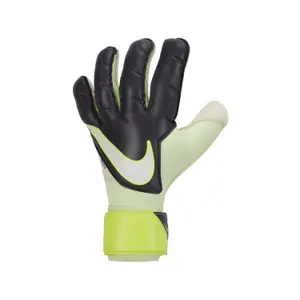
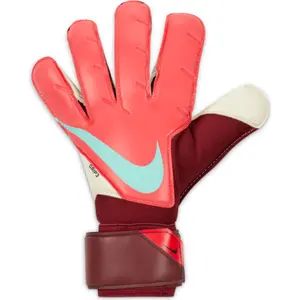
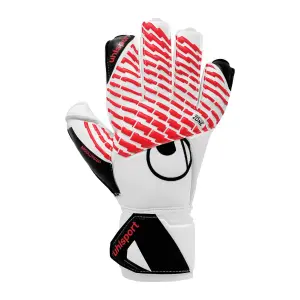
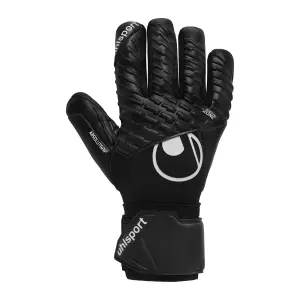
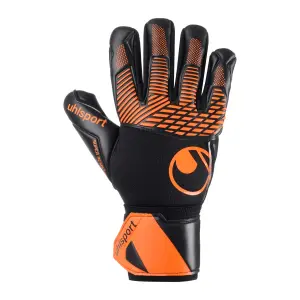
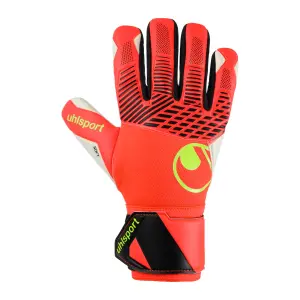
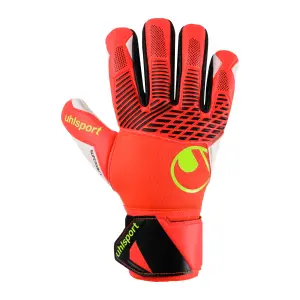


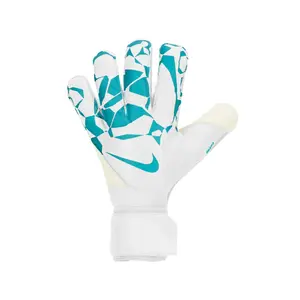


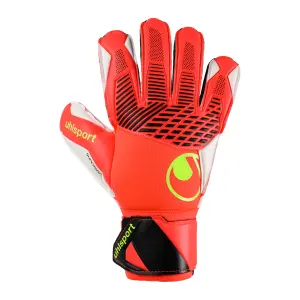


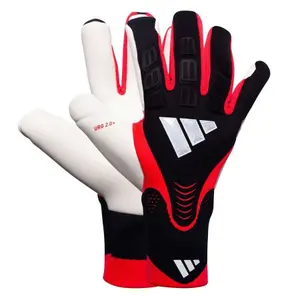


Goalkeeper gloves with finger protection include stiff reinforcements, called spines, inserted in the palm or on the back of the fingers. They limit hyperextension during dives and aerial challenges, a useful point for goalkeepers who make a series of saves on fast balls or who are returning from a finger injury.
What is a goalkeeper glove with finger protection?
A goalkeeper glove with finger protection is a model equipped with rigid or semi-rigid reinforcements, called spines, positioned on the back or sides of the fingers. These reinforcements limit the backward movement of the finger during a collision with the ball, which reduces the risk of hyperextension. This protection adds to the style of the glove, whether rollfinger, negative cut, hybrid, or flat: it relates to finger safety, not how the palm fits the ball.
Why wear gloves with finger protection?
You wear this type of glove when you want to limit finger injuries, especially after a sprain or during a recovery from injury. The spines come into play mainly during powerful strikes, fingertip deflections, and aerial challenges, moments when the finger can bend beyond its natural range. Some goalkeepers use them all the time, while others only during training or in matches deemed risky.
Rollfinger, negative cuts, hybrid, flat: what does it have to do with finger protection?
Finger protection is an independent criterion from the style of the glove: you can find spines on models made in rollfinger as well as flat cuts. The website classifies goalkeeper gloves according to these two axes, which you can view separately:
- The Rollfinger, a style where the finger's perimeter is wrapped around the ball to maximise contact area.
- The Negative Cuts, a style sewn on the inside for a close feel to the ball.
- The Hybrid Cuts, which combine different styles in one pair.
- The Flat Cuts, a classic style designed for comfort and ease of maintenance.
You can also return to the Types of Gloves page to compare all the available styles.
How to choose your finger protection gloves?
The choice depends first on your injury history and your position on the field. A goalkeeper returning from a sprain or dislocation will prefer rigid spines on all fingers, even if it means losing some flexibility in catching the ball. A goalkeeper without a history may opt for protection on the most exposed fingers, often the index and little finger, to maintain more freedom of movement. The size of the glove is crucial: a glove that is too big leaves the spines poorly positioned and reduces their effectiveness.
Where to find the best deals on finger protection gloves?
Ranges of goalkeeper gloves evolve regularly, especially around major shopping events. You can keep an eye on the Black Friday page and the end-of-year holiday promotions, then the winter sales and the French Days in spring to spot a good deal on a model with finger protection. The Clearance page groups end-of-line products, while the Good Deals and Special Offers gather ongoing promotions across all categories. If you're looking for the latest models added to the catalogue, the New Arrivals page dedicated to goalkeepers lists them, and the Shipped in 24h page shows which pairs go quickly.
Frequently asked questions
Does a glove with finger protection hinder ball handling?
The spines slightly reduce finger flexibility, which may be noticeable during the first few sessions. Most goalkeepers quickly adapt and regain a ball handling feel close to that of a glove without reinforcements, especially on models where the spines do not cover the whole length of the finger.
Is finger protection needed on all fingers or just some?
It depends on the models and the goalkeeper's needs. Some pairs protect all fingers, while others focus on the most used fingers during saves, like the index and little finger. A goalkeeper without a history of injury may settle for partial protection.
Do gloves with spines wear out differently than other goalkeeper gloves?
The spines themselves wear out very little as they do not touch the ball directly. It is mainly the palm, which is in constant contact with the ground and the ball, that determines the lifespan of the glove, regardless of the presence of finger protection.
Can you wear finger protection gloves indoors or for futsal?
Yes, nothing prevents you from wearing this type of glove in futsal, even if the play on the ground is more frequent than in the air. Some goalkeepers still reserve them for outdoor surfaces, where impacts with the ball are more intense.
How can I tell if a goalkeeper glove includes finger protection?
This information is found in the product details and in the name of the category on the website. When touched, a glove with spines has visible rigid or semi-rigid reinforcements on the back of the fingers, unlike a standard glove made of soft fabric over its entire length.