Junior goalkeeper gloves Uhlsport
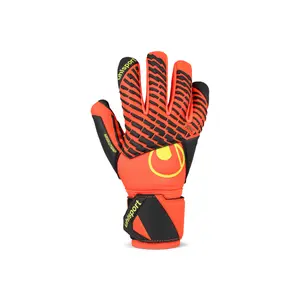
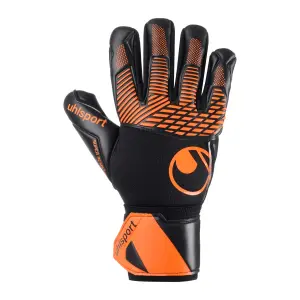
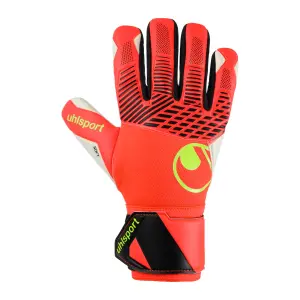
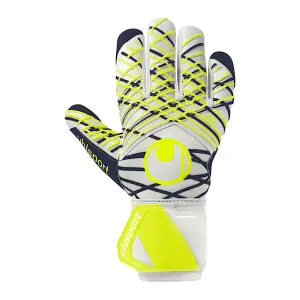
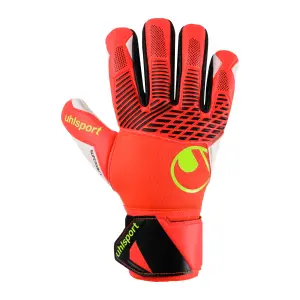
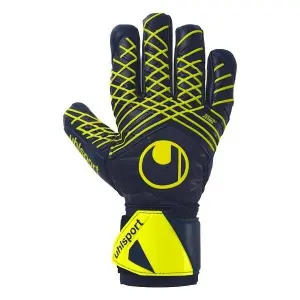

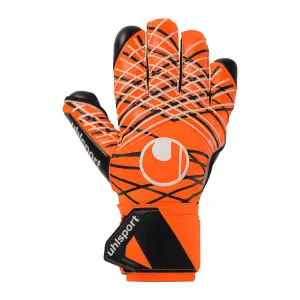
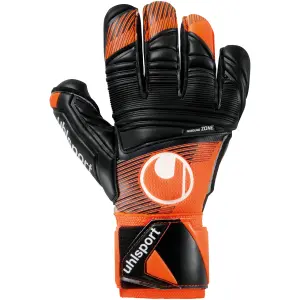
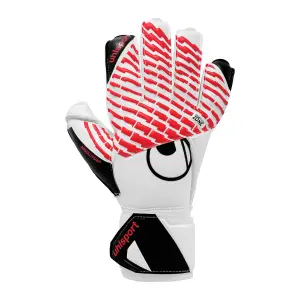
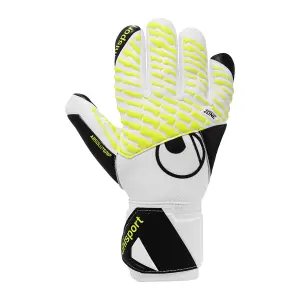
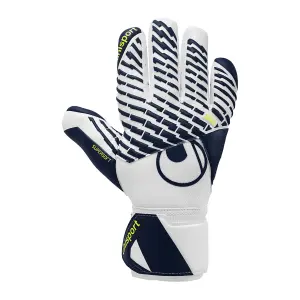
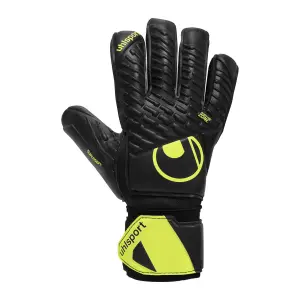
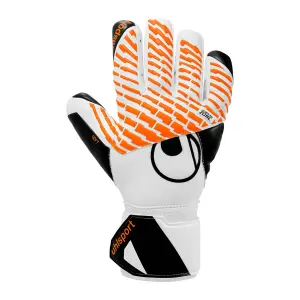
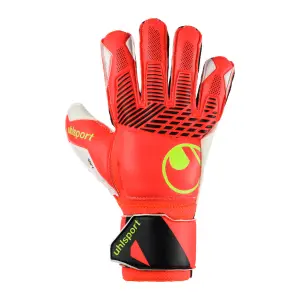
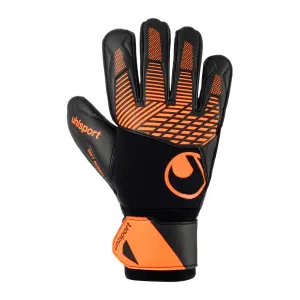
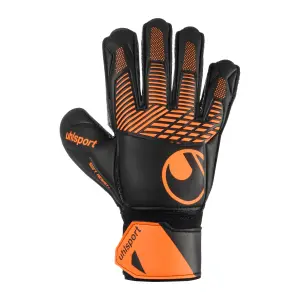
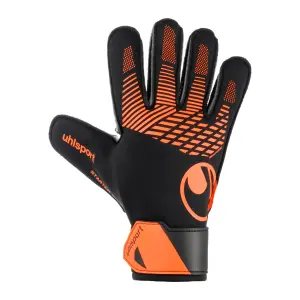
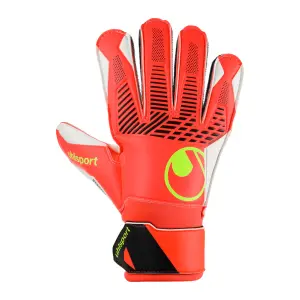

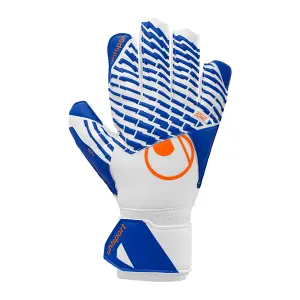
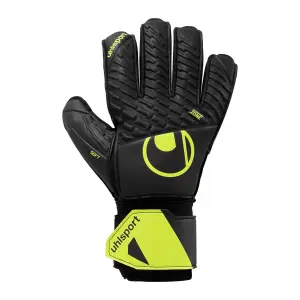

The goalkeeper gloves Uhlsport for kids gathered on this page meet the needs of young keepers, from the first training pair to the models saved for the weekend match. You will find junior sizes, different cuts, and several types of palm depending on the playing surface.
If you're still unsure between several brands, the page goalkeeper gloves for kids brings together all the available models.
Why choose goalkeeper gloves Uhlsport for a child?
Uhlsport is a German brand specialising in goalkeeper equipment, and its ranges are available in junior and adult sizes. For a child, this means models designed for smaller hands, rather than simply scaled-down versions of an adult glove. This is important because a young goalkeeper needs a glove that remains flexible: if it’s too rigid, the child can’t properly close their hand and ends up catching the ball with their arms instead of the gloves.
The other advantage of a brand focused on the position is the range of options. You can move from a training glove, worn several times a week and needing to withstand ground impacts, to a more grippy match glove, without changing size logic or cut. For a child who grows quickly, this continuity simplifies the replacement from one season to the next.
What size goalkeeper gloves should you choose for a child?
The size of a goalkeeper glove is measured by measuring around the palm, just below the fingers, and adding about a centimetre to determine the size of the glove. Children’s sizes typically range from 4 to 7, with size 8 already corresponding to a teenager's hand. A well-chosen glove leaves about half a centimetre in front of the fingertips: this slight surplus protects the fingers during extended saves.
Two common mistakes occur. Taking a size up to make the pair last actually costs in terms of precision: the glove spins on the hand, the palm no longer sits directly on the ball, and the child loses the feeling of grip. Conversely, a glove that’s too short compresses the fingers and tears prematurely at the seams. When you're in doubt between two sizes for a child who is growing, the larger of the two remains acceptable as long as the wrist strap is firm.
Cut, palm, protections: what to look for before buying?
Three elements clearly distinguish two pairs of gloves: the cut, the palm foam and the presence or absence of finger reinforcements. The cut determines how the glove wraps around the hand. A flat cut is the most classic and the most forgiving, a negative cut fits tighter and gives a feeling of hand closer to the ball, while a roll finger cut wraps the foam around the fingers and increases the surface in contact with the ball. For a young goalkeeper discovering the position, a flat or hybrid cut is the easiest to adjust to.
The palm foam affects grip and durability. Softer foam grips better but wears out quickly on hard ground, while denser foam lasts longer and is suitable for repeated training. For this reason, a seasoned goalkeeper often has two pairs, one for training and one kept for matches.
Finally, some models include support strips in the fingers, designed to limit hyperextension. They reassure many parents, but they reduce the flexibility of the glove. If the child is a beginner, flexibility often matters more than protection.
Which gloves for which playing surface and weather conditions?
The surface on which the child plays is the main factor that wears out a pair of gloves quickly. On synthetic grass, which is very abrasive, a dense or reinforced palm holds up much better than a soft match foam. In natural grass and wet weather, soft foam comes into its own, as it grips a wet ball.
In cold weather, long cuff models or closed sleeve gloves protect the lower forearm and limit mud entering the glove. In the dead of winter, a young goalkeeper can also wear a thin under-glove, provided it’s checked that the glove doesn’t become too tight.
Uhlsport, adidas, Nike, Reusch, Errea: comparing children’s glove brands
Uhlsport is not the only brand available for children’s goalkeeper gloves, and it’s often useful to compare before deciding. The following pages allow you to explore each brand separately:
- The children's adidas gloves, to find the ranges worn by many professional goalkeepers and the colours associated with the brand's collections.
- The children's Nike gloves, if you're looking for a pair that matches the rest of the child's Nike kit.
- The children's Reusch gloves, another brand historically specialised in the goalkeeper position.
- The children's Errea gloves, often considered for a simple training pair.
For a sweep of all brands at once and then filtering by size, the children's goalkeeper gloves page gathers all the selection.
How to care for gloves to make them last longer?
A goalkeeper glove is maintained by rinsing it in lukewarm water after each use, without using a washing machine or spinning. The palm foam is a fragile material: it degrades with dirt, sand, and harsh soap. A hand rinse, followed by air drying flat, away from radiators or direct sunlight, is sufficient in most cases.
Two tips can significantly extend the life of a pair. Never leave wet gloves in the sports bag, where they can stiffen and develop a bad smell. And avoid using the match pair for training: it’s the repeated ground impacts, more than the saves, that damage the foam.
Where to find children's goalkeeper gloves at a good price?
The site gathers its commercial offers on dedicated pages accessible all year round. The children's good deals compile promotional items for the youngest, while the clearance page focuses on end-of-line items and collections making way for the next ones. The selection shipped in 24h is handy when the pair needs to arrive before the weekend's match.
The timing plays a big role. The Black Friday kicks off the busiest shopping period of the year, followed by the year-end holidays, when a pair of gloves often appears on a young goalkeeper's wish list. Then come the winter sales, with their children's sales, followed by the spring French Days and the summer sales, which correspond to the end of the sports season. The special offers and good deals on the site are accessible outside these periods.
On the other hand, if you're looking for the models for the 2026/27 season rather than a good deal, the children’s new arrivals and the new arrivals page gather the latest additions, including glove colours.
Frequently Asked Questions
At what age does a child need real goalkeeper gloves?
As soon as the child plays regularly in goal at a club, an appropriate pair becomes useful, even in the youngest categories. Before that, for a child who alternates positions or plays in the yard, a simple training model is more than sufficient. The decisive factor remains the frequency of sessions, not the age.
Should you get gloves with support strips for a child?
The support strips limit the backward motion of the fingers and provide reassurance after a sprain, but they make the glove rigid. For a child who is starting out and needs to learn how to close their hand around the ball, a pair without support strips is often more comfortable. Some models offer removable support strips, allowing you to test both configurations.
My child wears out their gloves in a few weeks, is that normal?
This is common when the same pair is used for training and matches, especially on synthetic ground. The palm foam is designed to grip, not to withstand abrasion, and it wears out first at the contact points and the tips of the fingers. Alternating two pairs and rinsing the gloves after each session significantly slows down this wear.
How do you know if the gloves are the right size once worn?
Once the glove is closed at the wrist, there should be about half a centimetre of space in front of the fingertips and no material folds in the palm. If the child can rotate the glove around their hand, the size is too big. If the fingers hit the end as soon as the glove is put in place, you need to move up a size.
Can goalkeeper gloves be machine washed?
No, machine washing damages the palm foam and seams. Rinsing in lukewarm water by hand, without aggressive detergent, followed by flat air drying at room temperature preserves the grip much longer. There are also specific soaps for goalkeeper gloves, to be used sparingly.