Goalkeeper gloves adidas for kids and juniors
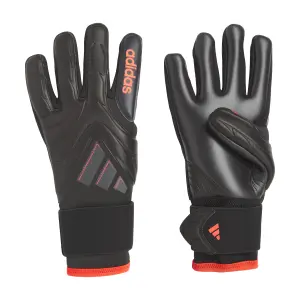

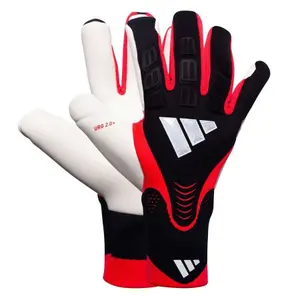
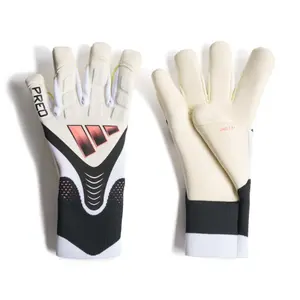
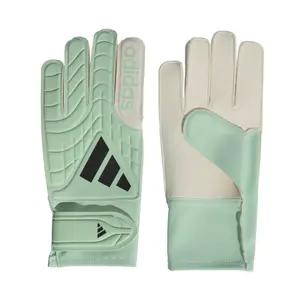
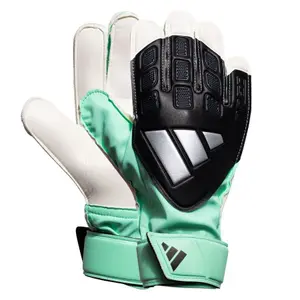
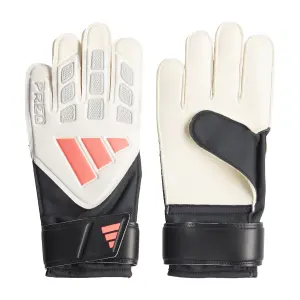
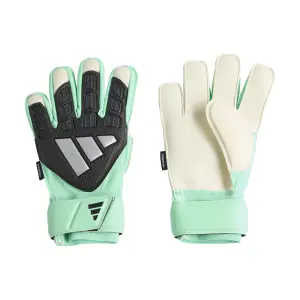


This page brings together the goalkeeper gloves adidas for children offered on Foot-Store, from training models to pairs designed for weekend matches. You'll find junior sizes, classic cuts, and versions with finger protection from the German brand.
If you're still unsure between several brands, you can go back to the full selection of children's goalkeeper gloves and compare before making a decision.
Which goalkeeper gloves adidas should you choose for a child?
For a child, a pair of goalkeeper gloves adidas is first chosen based on size and frequency of play, before considering technology. A young player who keeps goal once a week at training doesn't have the same needs as a regular goalkeeper who plays matches on hard ground. In the first case, a basic pair that is flexible and easy to put on is more than enough and can be replaced without regret as their hands grow. In the second case, a thicker latex palm and a well-secured wrist strap provide real benefits in both saves and the lifespan of the gloves.
The second criterion is the playing surface. Synthetic and clay pitches wear down latex much faster than grass, and a child playing in a gym or on stabilised surfaces wears through gloves quickly. It’s better to have a durable pair for matches and a simpler pair for training, instead of one high-end model that gets destroyed in two months.
Predator, Fingersave: how to navigate the adidas ranges
adidas structures its goalkeeper gloves around the Predator line, available in various finishing levels, and offers the Fingersave option on some models. The logic is simple: the higher the name of the finishing line, the more adhesive and thicker the latex palm is, and the more fitted the cut is. The most accessible versions are aimed at training and early matches, with a harder latex that wears less quickly and a more forgiving fit. The higher-end versions focus on grip and feel of the ball, at the cost of a more fragile palm on abrasive surfaces.
Fingersave refers to the stays placed in the fingers of the glove. These reinforcements stiffen the fingers and limit hyperextension backwards at the moment of impact, which reassures many young goalkeepers and parents. However, the hand is less free, and some children used to playing with their feet find them less flexible. On most junior models, these stays are removable or flexible, allowing you to try both sensations.
The back of the hand also varies from model to model: textured latex for punch clearances on match-oriented pairs, breathable mesh on training pairs. The detail matters less than the comfort felt by the child when trying them on.
What size goalkeeper gloves for a child?
The size of a child’s glove is measured by wrapping around the palm, just below the fingers, and converting this measurement into inches: the resulting number corresponds to the size. Junior sizes generally range from 4 to 7, with 8 marking the transition to adult sizes. A second method is to measure the length of the hand from the wrist to the tip of the middle finger, then add about one centimetre for extra space in front of the fingers.
The most common mistake is choosing too large a size to make the gloves last another season. A glove that is too long bunches at the fingertips, loses contact with the ball, and wears out quicker at these folds. A well-fitting glove leaves about half a centimetre to one centimetre in front of the middle finger, not more. Conversely, a glove that is too tight compresses the hand and quickly becomes painful in the cold.
Cut, latex, strap: what really changes from one model to another
Three elements differentiate two pairs of goalkeeper gloves: the cut, the nature of the palm, and the wrist closure system. The cut describes how the palm is sewn to the rest of the glove. A flat or classic cut offers a large contact surface and a generous volume, suitable for growing hands. A negative cut, sewn on the inside, fits the hand more tightly and gives a more direct feel of the ball, appreciated by more experienced goalkeepers.
The palm is always made of latex, but with different densities. A soft latex grips better and wears out faster; a denser latex withstands rough pitches. For a child, durability often takes preference over maximum grip. Finally, the wrist closure can be a wide elastic band, a simple Velcro strap, or a bandage that wraps around the wrist: the more enveloping it is, the firmer the hold, but the more the fitting requires independent movements.
Are adidas gloves or another brand better for a young goalkeeper?
adidas is not the only brand of goalkeeper gloves for children available at Foot-Store, and the choice often comes down to trying different hand shapes. Each brand has its own selection, which you can browse separately:
- The child goalkeeper gloves Nike, to compare the cuts and hand volumes with those of adidas.
- The child goalkeeper gloves Reusch, from a brand specialised solely in the goalkeeper position.
- The child goalkeeper gloves Uhlsport, another reference dedicated to goalkeepers, widely present in clubs.
- The child goalkeeper gloves Errea, often chosen for simple training pairs.
If you prefer to look through all brands at once before making a decision, the page for children's goalkeeper gloves gathers all available models, and the selection of new arrivals for kids shows the latest pairs that have arrived.
How to make a pair of child goalkeeper gloves last
A goalkeeper glove lasts longer if it is dampened before the match and rinsed off afterwards, never left to dry full of dirt. The latex palm performs better when slightly damp: a mist of clear water before stepping onto the pitch restores grip. After the session, a rinse with lukewarm water is enough to remove dust and sand that scratch the palm.
Drying should be flat, at room temperature, away from a radiator and out of the sports bag. Direct heat hardens the latex and causes it to crack. Avoid also storing both gloves palm to palm when they are still damp, as the latex sticks together and tears upon separation. These simple actions can significantly extend the lifespan of a pair, especially for a child playing on synthetic surfaces.
Where to find adidas goalkeeper gloves for kids at a good price
adidas goalkeeper gloves for children regularly appear in the permanent commercial pages of Foot-Store, which you can check at the right time. The kids' deals and the clearance page gather end-of-collection models, often very decent pairs where only the colour has changed from one season to the next. The special offers page and the 24-hour dispatch selection are useful when a pair breaks on Wednesday and there’s a match on Saturday.
The timing is just as important as the page. The Black Friday opens the busiest time of the year, followed by the holiday season, when a pair of gloves makes an easy-to-size gift if you know the hand measurement. Next come the winter sales for kids, followed by the French Days in spring, an interesting window for anticipating the end of the season. The general pages deals and sales cover the entire catalogue, and the new arrivals signal the arrival of collections as previous models start to drop in price.
Frequently asked questions
At what age does a child need proper goalkeeper gloves?
As soon as a child is keeping goal in matches, even in beginner categories, a pair of gloves suited to their hand size is useful. Before that, in football school, gloves mainly serve to protect against the cold and impacts on the fingers. The important thing is that the size corresponds to the child's hand and not a shortened adult pair.
Should you get gloves with stays for a child?
Finger stays, known as Fingersave at adidas, limit the backward movement of the fingers and provide reassurance after a sprain or for a goalkeeper facing powerful shots. However, they do reduce the flexibility of the hand and can sometimes hinder playing with the feet. Many junior models feature flexible or removable stays, allowing you to try both configurations without needing to buy a new pair.
Do adidas goalkeeper gloves fit large or small?
The sizes of goalkeeper gloves are based on the hand circumference in inches, which limits discrepancies from one brand to another, but the cut affects the feel. A negative cut fits more tightly and may feel small, while a flat cut appears roomier at the same size. If unsure between two sizes for a growing child, the size above is often okay as long as the margin in front of the fingers does not exceed one centimetre.
Why does the latex palm wear out so quickly?
Latex is a soft material by nature: this gives it its grip, and it’s also what causes it to wear out when in contact with the ground. Synthetic and stabilised pitches damage it much more quickly than grass, and the pressure from hands on the ground during warm-ups accelerates wear. Rinsing the palm after each use and saving the best pair for matches significantly slows down the phenomenon.
How many pairs of gloves should be expected in a season?
This entirely depends on the playing surface and the volume of play, and there are no fixed rules. A goalkeeper who trains twice a week on synthetic surfaces wears out their palm much faster than a child who plays on grass on Saturday mornings. The most economical solution often involves keeping one durable training pair and one match pair, while keeping an eye on clearance pages to renew the training pair.