Football gloves: knitted, fleece and under-gloves


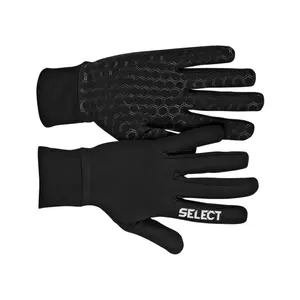


Discover the selection of football gloves designed for playing and training when the temperature drops: knitted gloves with textured palms, fleece gloves, lined gloves, and under gloves to wear under another pair. The models in the catalogue are by Nike, available in adult sizes, with several women's fits.
You can pair them with a beanie, warm socks, or a headband to cover all the areas that get cold during training evenings.
Why wear gloves for playing football in winter?
Football gloves help keep your hands usable when it's cold, not just warm. Numb fingers mean slick throw-ins, a painful touch on the ground, and a shortened session. On a windy pitch, your hands and ears are the first to give in, long before your legs, which keep moving. The models presented here are designed to be worn while playing: they remain thin, allow your fingers to bend, and have a palm that grips the ball. They are aimed at both male and female players as well as coaches and assistants, with the selection not including goalkeeper gloves.
What types of gloves can you find in this selection?
The selection includes four families of gloves, from the thinnest to the most covering. It features Nike models, in adult sizes, with cuts specifically for women.
- Knitted gloves, flexible and close to the hand, such as Nike Swoosh TG 3.0, Knit Swoosh TG 3.0 or Tech and Grip TG 2.0. Their palm is textured to maintain grip on the ball, making them a common choice for playing or training with.
- Fleece gloves, thicker and softer, like Nike Therma-Fit, Nike U City, or One Therma-Fit TG for women. They are made for times when you're not running: warming up, on the bench, pitch side, or travel.
- Insulated and thermal gloves, like Nike Therma-FIT TG and Total 90 Academy, which seek a balance between warmth and freedom of movement.
- Linings, such as Nike Therma-Fit Liner FG, very thin, to wear alone in cool weather or under another pair when it’s freezing.
Some models are available in a women's version, with a narrower hand and shorter fingers, for example, the women's gloves Nike LG Phoenix Fleece.
Gloves or liners: which to choose?
The liner is chosen when you want to keep maximum feeling, while the glove is for when you first seek warmth. A liner fits in your pocket, can be worn under a thicker glove on freezing days, and keeps your hands covered without losing touch with the ball. A knitted or fleece glove insulates more, but makes your hand bulkier. Simple rule: above a few degrees and during activity, a thin knit or liner is enough; below zero, during a long warm-up or while remaining static by the pitch, it's time for fleece or layering both.
How to choose the size of your football gloves?
The size of a glove is taken around the hand, palm measured at the base of the fingers, excluding the thumb. Measure your dominant hand, which is often the largest, and refer to the size guide displayed on the product page of the model you're interested in: sizes don't correspond the same across different ranges. A football glove should fit snugly without compressing, with just a tiny bit of finger free; otherwise, the fabric slips and grip is lost. Knitted gloves are forgiving of uncertainties because the knit stretches; fleece or insulated models are stiffer, and a size too small becomes uncomfortable. If you plan to layer a liner and a glove, leave enough room in the outer pair.
How to maintain gloves worn on the pitch?
Football gloves can be washed at low temperatures, by hand or on a delicate cycle, and dried naturally. The heat from a radiator or dryer hardens materials, distorts seams, and damages the palm's texture, which is the main benefit of the glove. Turn them inside out after the session so they dry from the inside, especially if they've gotten wet. Store them by pair in a bag rather than at the bottom of a damp pocket, and refer to the care instructions on the model's label, which should always take precedence over general advice.
Bands, socks, hats: matching accessories
Gloves can be complemented with other training accessories on the website, which you can check out separately:
- Hats to cover your head and ears, the areas that cool down fastest after the hands.
- Headbands, useful for keeping hair in place or keeping ears warm without the heat of a hat.
- Socks, to be renewed regularly, to complete your match and training outfit.
- Recovery socks, worn after exertion to help your legs recover from a match.
To see all the small pieces that complete an outfit, the accessories page groups all these selections in one place.
Where to find good deals on football gloves?
Gloves regularly appear in the site's permanent commercial pages, which remain online all year round. The good deals and special offers gather items whose prices have been revised; the clearance is the place to look for models from previous collections, often available in limited sizes. A winter accessory is primarily found at the end of the cold season, when ranges rotate.
Looking at the calendar, four times concentrate the best opportunities: Black Friday, then the end-of-year holidays, a period when a pair of gloves makes an easy gift, followed by the winter sales, and finally the French Days in spring. If you're in a hurry because of the cold, the page for 24h shipped items shows what goes fastest. And when new collections arrive, the new arrivals in the club store and new arrivals on the site indicate the models that replace the previous ones.
Frequently asked questions
Are gloves allowed during a football match?
Gloves are permitted by football rules for field players, provided they do not pose any danger to other participants. The referee remains the sole judge of the equipment worn on the pitch and may ask for the removal of an accessory deemed unsuitable. In youth and amateur competitions, thin knitted gloves are commonly used in winter.
Can a field player's glove be used as a goalkeeper's glove?
No, they are two different pieces of equipment: a goalkeeper's glove has a thick latex palm and finger protection that the gloves presented here do not have. Models from this selection are made to keep hands warm while maintaining grip, not to cushion a shot. A goalkeeper needs a specific pair, potentially worn over a thin liner.
Can these gloves be worn outside of football?
Yes, the knitted and fleece models in this selection can be worn both daily and on the pitch side. That's even why they're often seen on the shoulders of a parent or coach rather than a player. Very thin liners, however, are mainly useful during activity or layering.
What size gloves should I choose for a teenager?
The gloves in this selection come in adult sizes, and the smallest of these often suit a big teenager. The key is the measurement of the hand's circumference compared to the size guide of the model, rather than age. If unsure between two sizes for a knitted glove, the elastic knit allows you to go for the smaller one.
How much does a pair of football gloves cost?
The price depends on the material and construction: a thin liner is at the lower end of the range, while a fleece or insulated glove is higher. Current prices are displayed on each product page, as well as on the site's good deals and clearance pages. Comparing the two when choosing avoids paying full price for a previous collection model.