Goalkeeper ankle supports

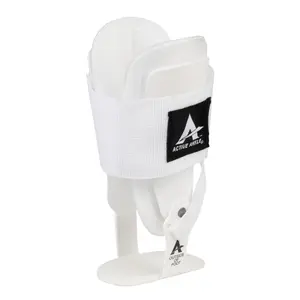


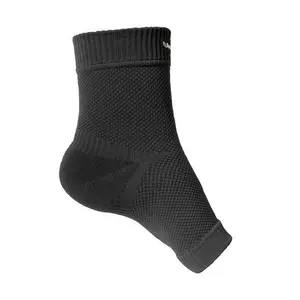


The ankle supports protect the joints of goalkeepers, who are exposed to sudden stops, dives, and twists. Here you will find models from McDavid, G-Form, Select, and Softee, ranging from light support for training to reinforced support after a sprain.
Why wear an ankle brace when you're a goalkeeper?
The ankle is one of the most stressed joints for a goalkeeper: sudden movements, dives, and aerial actions put it under strain every training session. A supportive ankle brace stabilises the joint, limits twisting movements, and provides security when recovering from discomfort or a sprain. It can be worn both as a preventive measure during training and in matches, where it offers enhanced support without restricting the necessary mobility for the position.
Which ankle brace to choose based on your needs?
The choice mainly depends on the level of support required and the time you will be wearing the protection.
- For light support, useful for prevention or training, the T2 ankle brace or the Active 2 ankle brace are suitable for everyday use.
- For more significant support after discomfort, the Phantom 2+ support ankle brace and the Phantom 3+ support ankle brace provide enhanced support designed to assist recovery.
- The G-Form Pro-X4 ankle brace is aimed at goalkeepers looking for a snug fit without losing sensation.
- The Basic neoprene ankle brace from Thuasne offers flexible support and local warmth, which is useful during periods of widespread discomfort, while the reinforced support ankle brace from Thuasne is suitable for more extensive immobilisation.
- The McDavid Achilles Runners' Therapy ankle brace specifically targets the Achilles tendon area rather than the ankle joint itself.
- The Epitact ErgoStrap ankle brace slips easily under a sock for discreet everyday support.
The brands of ankle braces available at Foot-Store
The catalogue features brands specialised in sports protection and joint support.
- McDavid offers various levels of support with the Phantom range, as well as a model dedicated to the Achilles tendon.
- G-Form presents its Pro-X4, designed to wrap around the joint without hindering support.
- Select provides ankle braces suitable for regular use, both during training and matches.
- Softee completes the selection with protections focused on flexible support.
Other protections for goalkeepers
The ankle brace is part of a broader protective gear that you can explore zone by zone.
- The shin guards, to protect the front of the leg against impacts.
- The knee pads, useful for cushioning landings during dives.
- The elbow pads, designed to protect the elbows during blocks and throws.
Find all goalkeeper protections on the Protections page.
When to look for good deals on goalkeeper ankle braces?
Several pages of the site compile the best offers on goalkeeper protections based on the time of year.
- The Black Friday is often an opportunity to renew your protective gear before the winter season kicks in.
- The end-of-year holidays, along with the Special Offers page, allow you to complete a gift set or to gift equipment.
- The winter sales gather discounts on clearance items and the current selection models.
- In spring, the French Days offer another buying window, which you can keep an eye on via the Bons Plans page.
For a more immediate response, the Shipped in 24h page gathers readily available items, and the Stock Clearance sometimes helps find a model in the last series. The new goalkeeper releases are also worth checking out with each collection launch.
Frequently Asked Questions
Can an ankle brace be worn directly inside a goalkeeper's shoe?
Yes, most supportive ankle braces are designed to be worn under the sock, between the foot and the shoe, without interfering with the lacing. It's important to ensure that the volume of the ankle brace is compatible with your usual shoe size, as some reinforced models take up a bit more space.
How to find out your ankle brace size?
Size is usually determined by measuring the circumference of the ankle, just above the bone. Each brand has its own size guide, with the ranges McDavid, G-Form, and Select not necessarily having the same standards across different models.
Can an ankle brace replace strapping?
A supportive ankle brace provides reusable support and is easier to put on than re-strapping for each session, but the level of immobilisation isn't always the same. In case of a recent injury or uncertainty, the advice of a healthcare professional is the best reference to choose between the two solutions.
Should the ankle brace be worn under or over the sock?
Most models are meant to be worn directly against the skin, underneath the sock, for support that’s as close as possible to the joint. Some thinner ankle braces, like the Epitact ErgoStrap, are specifically designed for this type of discreet wear.
How long should an ankle brace be worn after a sprain?
The duration of wear depends on the severity of the injury and the opinion of the healthcare professional overseeing the recovery. A reinforced support ankle brace, like the Phantom range from McDavid, often accompanies the gradual recovery phase before transitioning back to lighter support once the joint is stabilised.