Goalkeeper gloves T1TAN: how to choose the right pair


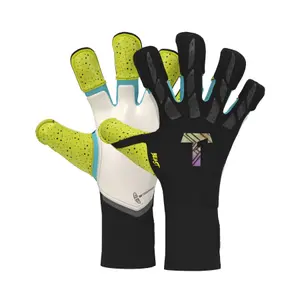
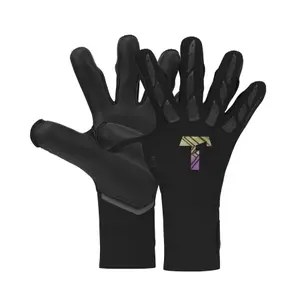
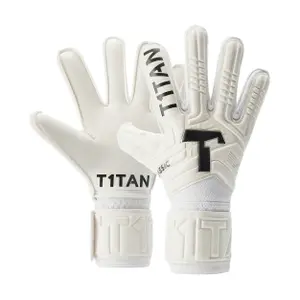


The goalkeeper gloves T1TAN gathered here cater to both the weekend player and the beginner: various cuts, different palm foams, available in adult and children's sizes. You can browse the selection to find the pair that fits your hand, suits your playing surface, and matches your frequency of use.
If you're still unsure between several brands, the goalkeeper gloves page consolidates the entire catalog.
Why choose T1TAN goalkeeper gloves?
T1TAN is a brand fully focused on the goalkeeper position, and its gloves are designed for that sole purpose. Unlike general sports brands that dress the goalkeeper the same way they dress the rest of the team, this brand focuses its catalog on the palm, the cut, and wrist support. For you, this means clear choices: you first pick a cut and a level of foam, then a colour, without getting lost in dozens of variations.
This selection is aimed at both club goalkeepers who wear multiple pairs throughout the season and casual players looking for a reliable pair for training. The position requires equipment that needs to be replaced regularly: a palm wears out, which is normal, and it's even a sign that it has done its job.
How to choose the size of your T1TAN gloves?
The size of a goalkeeper glove is measured by taking the circumference of the palm just below the fingers, and adding about a centimetre for the glove's length. Goalkeeper glove sizes are numbered, typically from 4 to 11: the smaller sizes correspond to children, and the larger sizes to wide adult hands. A pair that is too large floats when catching the ball and creases inside the palm, while a pair that is too tight pulls at the tips of the fingers as soon as you close your hand.
A simple guideline: a few millimetres of space should remain in front of the nails when the hand is flat, no more. If you're unsure between two sizes, think about the intended use. For a goalkeeper who often plays on hard ground or in cold weather, a slightly snug glove maintains ball touch better. For a growing child, opting for a larger size is tempting, but the glove then loses some precision on low balls.
Negative cut, roll finger, flat or hybrid: which one to choose?
The cut refers to how the palm is assembled to the fingers, and it's it that most affects the sensation in hand. Four main types are found in most goalkeeper glove brands, including T1TAN:
- The negative cut has its seams inside the glove. It hugs the finger and gives a feeling very similar to bare hands, which is appreciated by goalkeepers who like to feel the ball. This is the most requested cut today but also the most fitted: avoid it if you have thick fingers.
- The roll finger cut wraps the foam around the finger, with no side seams. It offers more surface contact with the ball and a snug fit, with a slightly more generous volume.
- The flat cut, the most classic, leaves the seams visible on the outside. It is loose, easy to slip on, and often chosen for beginners or training.
- The hybrid cut combines the previous ones, for example, a roll finger base on some fingers and negative on others, to combine contact surface and fitted feel.
If this is your first pair, the flat cut or a wide hybrid will better forgive sizing mistakes. An experienced goalkeeper who knows what they like will often prefer the negative cut.
Gloves with or without finger protection?
Finger protections are stays inserted in the back of the glove that limit hyperextension of the finger backwards. They are primarily of interest to goalkeepers who have previously injured their fingers, those who take powerful shots, and children whose joints are still fragile. However, they stiffen the hand and can hinder some goalkeepers when throwing or playing with their feet.
On many models, these stays are removable: you can take them out for training and put them back in on match day, or remove only part of them. This is the most flexible compromise if you’re not yet sure which way you lean.
Which pair for training, for matches, for a child?
It all depends on how often you use them and the surface you play on. Softer foams grip the ball strongly but wear out quickly, especially on abrasive synthetic or stabilised surfaces: they are better reserved for matches. Denser, more durable foams handle the repetition of training sessions better and are suitable for daily training.
For a child or a beginner goalkeeper, a versatile pair used in training as well as in competition remains the most sensible choice: at this age, growth necessitates changing sizes before the glove is really worn out. Many club goalkeepers end up using two pairs in parallel, one for the week and one saved for the weekend. This is also the best way to let a pair dry between uses.
How to maintain and prolong the life of your goalkeeper gloves?
A goalkeeper glove should be rinsed in lukewarm water after use, without a machine, wringing, or drying on a radiator. The latex of the palm dries out and cracks when heated or when it is full of dirt: dried mud acts as an abrasive on the next outing. Drying the gloves flat, in the open air, with the palms separated, greatly extends their lifespan.
Moistening the palm slightly before kick-off also helps grip the ball better than a dry palm. For specific soaps, grip sprays, and dedicated accessories, the page glove maintenance gathers everything used to clean and revive a palm.
Other goalkeeper glove brands to compare
T1TAN can easily be compared to other brands in the position, each with its own preferred cuts and styles. You can check separately:
- The gloves Uhlsport and the gloves Reusch, two historical specialists in goalkeeping, with ranges spanning from casual to competitive.
- The gloves adidas, the gloves Nike, and the gloves Puma, if you want to stick with the brand that already outfits your shoes or your club.
- The gloves HO Soccer and the gloves Select, two brands noted by goalkeepers looking for less common cuts.
- The gloves Erima, gloves Joma, gloves Macron, and gloves Errea, often chosen when the club is already equipped by one of these brands and you want to stay in the same line.
To browse all brands in one go and filter by size or cut, visit the goalkeeper gloves page.
Where to find good deals on T1TAN gloves?
Offers on goalkeeper gloves are concentrated on a few pages of the site, which you can keep an eye on throughout the season. The Black Friday kicks off the period, followed by year-end holidays, then winter sales, and the French Days in spring. In between, the good deals page and the special offers collect ongoing promotions.
The clearance section is where to look when a collection makes way for the next: these are often colours from the previous season on still relevant models. Conversely, the new goalkeeper products and the new products on the site show what has just arrived, useful at the start and every collection change. If you need to be equipped for the next match, the 24-hour dispatch page filters what ships the fastest.
Frequently asked questions
Do T1TAN gloves run large or small?
Like with most goalkeeper glove brands, perceived size depends mainly on the cut chosen and not solely on the brand. A negative cut feels tighter than a flat cut at the same size. The most reliable method is to measure the palm's circumference just below the fingers and add a centimetre, then check the size guide indicated on the product page of the model you’re interested in.
How long should you wait before changing goalkeeper gloves?
There is no fixed duration: a latex palm wears out depending on the number of sessions, the playing surface, and maintenance. The signal to watch for is loss of grip, when the ball slips on a palm that has become smooth or when the latex starts to crack. Many club goalkeepers keep a recent pair for matches and rotate an older pair for training.
Can you put goalkeeper gloves in the washing machine?
No, the washing machine damages the latex and detaches seams. Washing should be done by hand, in lukewarm water, possibly with a soap designed for glove palms. After that, drying should be done flat and in the open air, never on a radiator or in direct sunlight.
Should you get gloves with stays for a child?
Finger protections reassure parents and limit the risk of hyperextension, but they stiffen the hand, which can hinder a young goalkeeper still learning to catch the ball. A good compromise is to choose a model with removable stays so they can be taken out during training. If the child has already injured a finger, keeping them in for the match makes sense.
What budget should you expect for a pair of T1TAN gloves?
Prices vary based on the range, cut, and type of foam, and they change throughout the season: the prices shown on each product page of the selection are the only current ones. In practice, a versatile training pair costs less than a match pair with soft foam. Checking the clearance and good deals pages often allows you to find a higher-level model in a previous collection colour.