Football goalkeeper gloves Puma
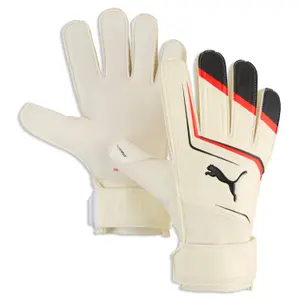
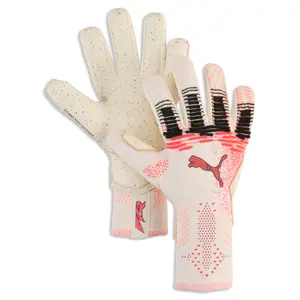
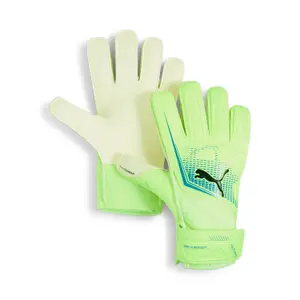
The goalkeeper gloves Puma are divided into two main lines, Ultra and Future, ranging from training models to those worn in competitions. Here you will find the Puma pairs available for the 2026/27 season, in adult and child sizes.
If you want to compare with other brands before making a decision, the complete selection of goalkeeper gloves includes all the manufacturers offered on Foot-Store.
What characterises Puma goalkeeper gloves?
Puma goalkeeper gloves are based on two product families, Ultra and Future, each available in several finishing levels ranging from the model designed for training sessions to the one made for matches. Each line comes in various cuts, allowing you to choose a glove that is either snug or more enveloping, depending on your hand and your preferences. The brand uses latex palms of different thicknesses depending on the quality levels, with the softest latex reserved for high-end models, which are more grippy but also more fragile on dry ground. It’s this combination of line, level, and cut that determines the glove that will suit you, much more than the name of the model itself.
Ultra or Future: how to choose between the two Puma lines?
The difference between Ultra and Future mainly lies in the type of fit and the spirit of each line, the two covering the same uses on the pitch. The Ultra line is associated with Puma products focused on speed and lightness, with models that have a tight fit on the hand. The Future line is linked to products focused on control, featuring models that rely on palm grip and ball contact.
In practice, a goalkeeper who likes to feel the glove like a second skin will tend to go for the more fitted versions, regardless of the line. A goalkeeper looking for more catching surface and comfort will choose a wider cut. The most reliable advice is to first identify the fit that works for you, then check which line it is available in at the quality level you aim for.
Which cut of glove to choose: negative, hybrid or classic?
The cut refers to how the palm is assembled to the rest of the glove, and it’s the criterion that most changes the feel in hand. The negative cut places the seams inside the glove: the result is very close to the hand, appreciated by goalkeepers who want a direct touch, but it requires a well-chosen size as the internal volume is reduced. The hybrid cut combines two assembly methods to offer both a good catching surface and a close fit to the hand, making it a good compromise when you’re unsure. More traditional cuts, with visible seams on the sides of the fingers, allow for more volume and suit goalkeepers who find negative cuts too restrictive.
If you’re new to the position, start with a standard or hybrid cut: it is more forgiving of an approximate size and can be worn for longer without discomfort.
How to measure the size of Puma goalkeeper gloves?
The size of a goalkeeper's glove is measured from the circumference of the palm, expressed in centimetres, which is then converted into glove size. Measure your hand flat, just under the fingers, without including the thumb, then add about a centimetre to get the corresponding size. A properly fitted glove leaves a very slight space at the fingertips, no more: if it’s too short, it limits movement and wears quickly at the seams, if it’s too big, it slips and reduces precision on ball handling.
Negative cuts fit tighter than others, so it’s best to take this into account if you are switching cuts. For a growing child, a size slightly larger is more reasonable than a glove that will be too small halfway through the season.
Which Puma gloves for a young goalkeeper or beginner?
For a young goalkeeper or a beginner, entry-level and mid-range models are the most suitable, as they use more abrasion-resistant latex than the very soft palms of competitive models. These pairs handle repeated training on artificial ground or synthetic surfaces better, where high-end latex wears out in a few sessions. Child sizes follow the same measurement guidelines as adult sizes, with smaller sizes. Some models include finger protections, useful for reassuring a new player but limiting hand flexibility.
How to maintain goalkeeper gloves to make them last?
Maintaining a pair of gloves starts with rinsing the palm in lukewarm water after each use, to remove dirt and sand that can damage the latex. The gloves should then be left to dry flat, at room temperature, away from radiators or direct sunlight which can harden the palm. Slightly moistening the palm before a match on dry ground also improves grip. Products designed for this purpose, such as grip soaps and sprays, are grouped on the glove care page, which gathers items to clean and revive the latex between matches.
Which other goalkeeper glove brands to compare with Puma?
If you want to compare Puma with other brands before making a choice, each brand has its own page on Foot-Store:
- The gloves adidas and the gloves Nike, two catalogues structured like that of Puma, with lines ranging from training to competition.
- The gloves Uhlsport and the gloves Reusch, two specialists in the goalkeeper position, known for the breadth of their selection of cuts and latex.
- The gloves T1TAN and the gloves HO Soccer, two brands entirely dedicated to goalkeepers, often with very distinctive designs.
- The gloves Erima, Joma and Select, brands present in many clubs, to consider if you’re looking for a simple pair for training.
- The gloves Macron and Errea, two Italian brands to check if you want to stay consistent with your club's kit.
And for an overview, the page for goalkeeper gloves brings all these brands together in one spot.
Where to find Puma goalkeeper gloves on sale?
Sale gloves can be found on the commercial pages of the website, which remain online all year round and change content as the seasons pass. The good deals page gathers current offers, while the clearance focuses on end-of-line items and colours from previous collections, often the best place for a quality match pair at a low budget. The special offers and the shipped within 24h page complete the options when you need to gear up quickly.
In terms of timing, the Black Friday kicks off the discount season, followed by the year-end holidays, then the winter sales and the French Days in spring. New pairs, for their part, appear on the new arrivals of the goalkeeper specialist or in the new arrivals section of the site, the right time to watch for models from the previous season that move to clearance.
Frequently asked questions
Do Puma gloves suit synthetic pitches and futsal?
On synthetic surfaces, a very soft latex palm wears out quickly due to the abrasive nature of the surface: it’s better to reserve this type of glove for matches and keep a more durable pair for training sessions. Indoors, goalkeepers often play with thin gloves or no gloves, as the pressure points and ball handling differ from eleven-a-side football. The entry-level and mid-range Puma models handle hard surfaces the best.
Should you get gloves with finger protection?
Finger protections are splints inserted into the fingers of the glove, which limit hyperextension backward during a poorly controlled save. They reassure young goalkeepers and those returning from hand injuries, but they reduce flexibility and can hinder some goalkeepers on hand throws. On several models, these splints are removable, allowing you to test both configurations with the same pair.
How long do a pair of goalkeeper gloves last?
The lifespan mainly depends on the latex and the playing surface, not on the brand: high-end latex used daily for training on dry ground wears out in a few weeks, while a harder latex reserved for matches can last most of the season. Many goalkeepers use two pairs alternately, one for training and one for competition. Rinsing after each use and air-drying significantly extends the lifespan of the palm.
What's the difference between entry-level Puma gloves and competition models?
The gap mainly concerns the quality of the palm foam, the finish of the cut, and the materials on the back of the hand. A competition model offers more grip, especially in wet conditions, but wears out faster and costs more. For an amateur goalkeeper training twice a week, an intermediate model often offers the best balance between grip and longevity.
Can goalkeeper gloves be washed in a washing machine?
Machine washing is not recommended: heat, spinning, and regular detergents damage the foam of the palm and can unstick the seams. Cleaning should be done by hand, with lukewarm water, using a mild soap or a product specifically designed for latex, followed by flat drying away from heat sources. Suitable products are gathered on the page dedicated to glove maintenance.