Football balls Puma
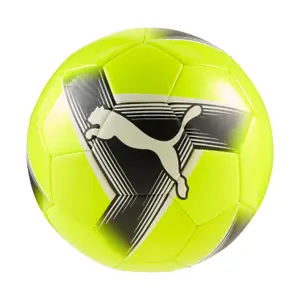

Are you looking for a football Puma to train with or to play a match? This page brings together the balls from the brand available on Foot-Store, designed for different uses and levels of play.
Here you can find models suitable for everyday training as well as balls that are closer to competitive standards, in the common sizes for amateur and recreational football.
Football Puma Ball: Which Model to Choose?
The choice of a Puma ball mainly depends on how you plan to use it: regular training, weekend games, or just casual play with friends. The brand offers balls designed to endure repeated strikes and different surfaces, from synthetic to natural ground. A training ball prioritises durability and consistent touch over time, while a match ball aims for precise flight and optimal handling during control.
Match Ball or Training Ball Puma
The difference between a match ball and a training ball mainly lies in the construction and finish. A match ball is typically designed for a stable trajectory and a fine touch, with special attention given to stitching and outer coating. A training ball, which is more versatile, is made to withstand heavy use, strikes against a wall, or repeated sessions on abrasive surfaces. If you play in a club or regular competitions, opt for a match model; for daily training use, a more robust ball will do just fine.
Which Size of Puma Ball to Choose Depending on Age and Skill Level
The size of the ball primarily depends on the player's age and skill level. Smaller sizes are suitable for younger players who need a lighter and easier-to-control ball to develop their skills. The standard size, used starting from adolescence and in adults, corresponds to the official dimensions for eleven-a-side football. If you're unsure between two sizes, go for the one recommended for the player's age category rather than choosing a larger size "to last longer."
Nike, adidas, Uhlsport: Other Football Ball Brands
If you want to compare Puma balls with other brands in the catalogue, several pages allow you to check out each section separately:
- Nike balls, with models focused on speed and precision.
- adidas balls, some of which are linked to official competitions.
- Uhlsport balls, often chosen for club training.
- Givova balls, an alternative for casual and school use.
- Hummel balls, designed for versatile training use.
You can also return to the Brands page to find all the manufacturers available on Foot-Store.
When to Take Advantage of the Best Deals on Puma Balls
The prices of Puma balls vary according to sales periods, and several events on the site help you spot good deals. Black Friday and the year-end holidays often kick off the winter sales, followed by the winter sales and then the French Days in spring. You can also check the Deals and Clearance pages at any time, which gather ongoing offers from all brands, or the Shipped in 24h page if you need a ball quickly. To discover the recently added models to the catalogue, the New Arrivals page is regularly updated, especially at the start of the season and during new collections' releases.
Frequently Asked Questions
Can a Puma training ball be used in a match?
Yes, a training ball can definitely be used in an amateur match or for casual play. It just might not always meet the same accuracy standards as a competition ball. For an official match under a club's organisation, it's best to refer to the organiser's requirements.
How can I tell if a Puma ball is inflated properly?
The recommended pressure is usually marked directly on the ball, near the inflation valve. An over-inflated ball loses touch and bounces less controllably, while an under-inflated ball lacks responsiveness. It's advisable to check the pressure before every use, especially in cold weather.
Are Puma balls suitable for synthetic pitches?
Most footballs, including Puma and other brands, are designed to be used on both natural and synthetic surfaces. Training models, being more durable, generally withstand repeated abrasion from synthetic surfaces better over time.
What is the difference between a thermally welded ball and a stitched ball?
A thermally welded ball has a smoother surface with no visible seams, which limits water absorption and stabilises the trajectory. A stitched ball remains more common in entry-level training models, offering good durability for daily use. The choice mainly depends on your budget and how often you will use it.
Can you gift a Puma ball to a child starting football?
Yes, as long as you choose a size suitable for their age instead of a standard size ball. A smaller, lighter ball makes it easier for young players to learn control and striking.